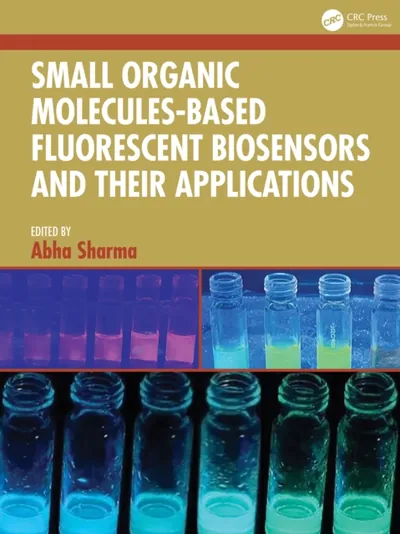
Small Organic Molecules-Based Fluorescent Biosensors and their Applications
E-book
US$81.30
About this title
This book provides an overview of organic molecule-based fluorescent compounds and their applications as sensors and biosensors. The initial chapter introduces fundamental fluorescence concepts and their significance in biosensing. The book, in turn, details the synthesis of various scaffolds including xanthene, BODIPY, julolidine, cyanine, quinoline, phenanthiridine, acridine, rhodamine, benzothiazole, coumarin, perylene, and carbazole. The subsequent section covers the use of these organic fluorescent molecules in sensing proteins and DNA through selective binding, ion indicators for real-time tracking, and receptor-specific ligands for interaction studies. It also explores cellular component visualization using organelle markers and membrane probes. Additionally, the book delves into the application of fluorescent organic molecules for sensing lipids, carbohydrates, and other biological molecules, fostering interdisciplinary understanding. Addressing environmental concerns, the book highlights the use of fluorescent probes for analyte analysis, providing insights into pollution monitoring and water quality assessment. This book is useful for researchers, students, and professionals seeking to understand and harness the potential of these innovative biosensing technologies.
Key features
- Provides a comprehensive overview of the synthesis and development of organic molecule-based fluorescent compounds
- Presents applications of organic molecule-based fluorescent compounds in various aspects of biological and environmental analysis
- Discusses the applications of fluorescent compounds in sensing of lipids, carbohydrates, and other biological molecules
- Reviews the role of fluorescent probes in monitoring pollution and assessment of water quality
- Examines the role of biosensors as ion indicators for real-time tracking, and receptor-specific ligands for interaction studies
- Explores cellular component visualization using organelle markers and membrane probes
Details
- Publisher
- CRC Press
- Language
- EN
- Format
- EPUB
- Published
- ISBN
- 9781040370292
- File protection
- Watermark — opens on any reader, no extra account needed