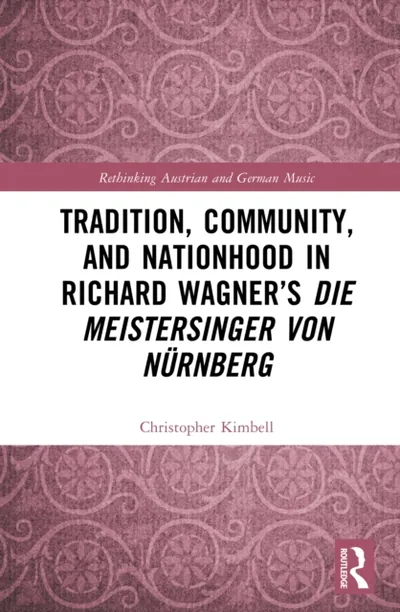
Tradition, Community, and Nationhood in Richard Wagner's Die Meistersinger von Nurnberg
E-book
US$66.14
About this title
Since its premiere in 1868, Wagner’s Die Meistersinger von Nürnberg has defied repeated upheavals in the cultural-political landscape of German statehood to retain its unofficial status as the German national opera. The work’s significance as a touchstone of national culture survived even such troubling episodes as its public endorsement in 1933 as ‘the most German of all German operas’ by Joseph Goebbels or the rendition in previous years by audiences at Bayreuth of both national and Nazi-party anthems at the work’s culmination. This chequered reception history and apparent propensity for reinterpretation or reclamation has long fuelled debates over the socio-political meanings of Wagner’s musical narrative. On the question of Beckmesser, for instance, heated arguments have surrounded the existence of antisemitic stereotypes in the work as well as their possible indication of a racial-political dimension to Sachs’s restoration of Nuremberg society. Through a combination of musical-textual analysis with critical theory, this book interrogates the ideological underpinnings of Die Meistersinger’s narrative. In four interconnected studies of the characters of Walther, Sachs, Beckmesser, and Eva, the book traces a critical potential within the opera’s construction of provincial and national identities and problematizes existing discourse around its depiction of race and gender.
Details
- Publisher
- Taylor & Francis
- Language
- EN
- Format
- EPUB
- Published
- ISBN
- 9781040040652
- File protection
- Watermark — opens on any reader, no extra account needed