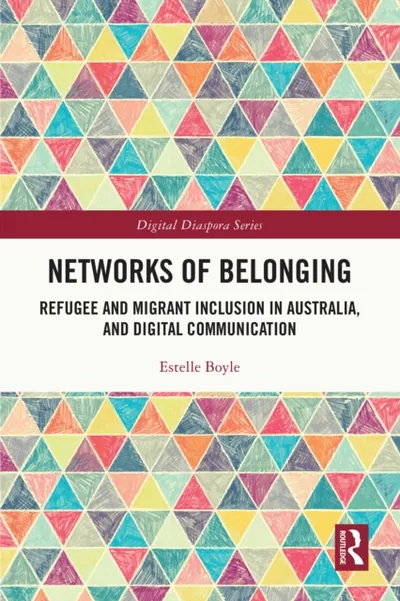
Networks of Belonging
E-kniha
66,14 USD
O titule
This book examines how digitally networked communication technologies create spaces of belonging for people of refugee and migrant backgrounds in resettlement contexts, focusing on Australia.
The internet has become a primary facilitator for social connection, transforming how displaced and mobile people maintain relationships across distance. For communities facing significant barriers to connection, such as globally dispersed social networks and often the inability to return to their place of origin, digital technologies can offer vital pathways to belonging and social inclusion in new environments. The book grounds its analysis by first considering the history of refugee and migrant inclusion in Australia and the historical practice of migrant letter-writing, as a critical analogue reference point to today’s digital ubiquity. By investigating how communication technologies enable access to social connection, particularly among those navigating resettlement, the research offers lived perspectives on the evolving nature of digital sociality and its importance for refugee and migrant communities. While digital platforms and global connections meaningfully support inclusion and belonging, physical and local interaction remains indispensable. Digitally networked communication technologies serve as valuable connection tools, most significantly by including those otherwise marginalised, facilitating in-person encounters, and localising global experiences regardless of physical location. Yet this represents only half the picture. By often prioritising global and digital connections, networked communications can paradoxically render people absent or disconnected from local and physical spaces, potentially leading to exclusion rather than inclusion. The book establishes three key dyadic relationships of interstitiality framing its analysis: inclusion-exclusion, digital-physical, and local-global. Its significance lies in highlighting the nuances of situated lives and personal narratives gathered through qualitative interviews and photo-elicitation with people of refugee and migrant backgrounds in Melbourne, Australia, while advocating for a relational understanding of social inclusion, exclusion, and belonging; digital and physical sociality; and a local and global sense of place.
Podrobnosti
- Vydavateľ
- Taylor & Francis
- Jazyk
- EN
- Formát
- EPUB
- Vydané
- ISBN
- 9781040407349
- Ochrana súboru
- Vodoznak — otvorí sa v každej čítačke, bez ďalšieho účtu